
 Skip to content
Water And Ice Safety: read this before you go
The Massachusetts state flower is the mayflower, the state tree is the American elm and the state berry is the cranberry. Spring ephemerals typically open from late March into May, and the state fines digging up the mayflower on public ways or another person’s land without written authority.
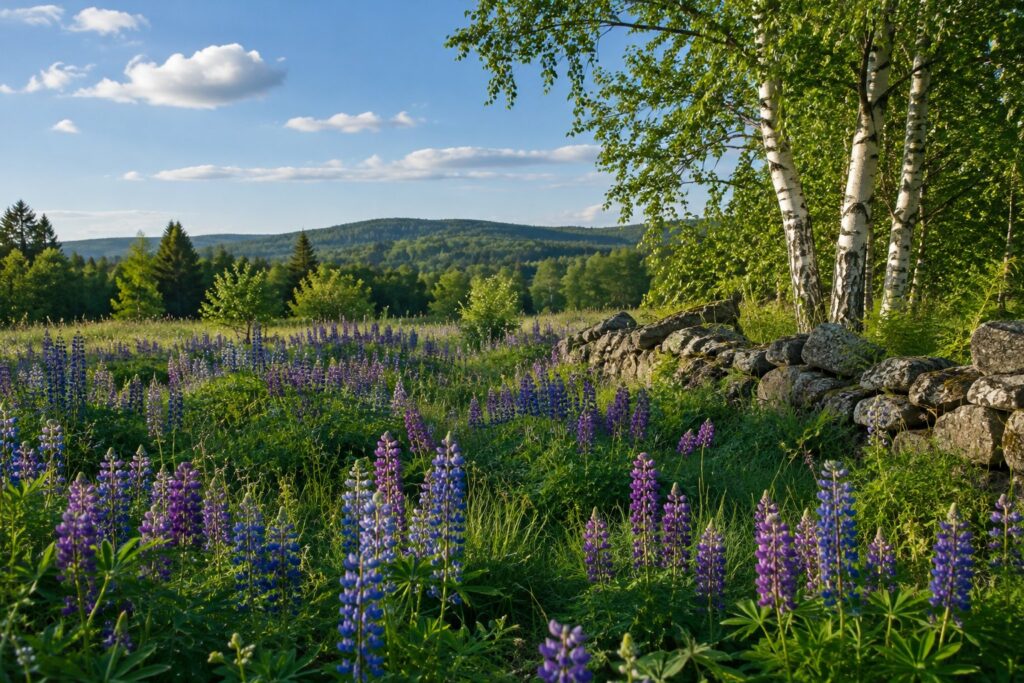
This guide sticks to what the state statutes, the Park Service, Mass Audubon, the Trustees and UMass say, grouped by habitat, with a month-by-month calendar. We leave out where rare plants grow, and we list Before You Go: Check These. mass.gov would not load for us, so check it too. Bloom times are “typically”: always check the site you plan to visit.
Wildflowers, Trees and Plants You Might See
Where and when come from the source in the last column. Bloom times are “typically”: they shift with weather from year to year, so check with the park, garden or preserve before you go. Information as of October 30, 2026.
State Symbols
| Plant | Where and when, per the source | Care note | Source |
|---|---|---|---|
| Mayflower (state flower) | The statute names the mayflower (Epigaea repens) the flower emblem. It also makes it an offense to pull up or dig up the plant or any part of it, or to injure it beyond what is reasonably necessary to procure the flower, on a state highway or other public way or place, or on another person’s land without written authority. See Staying Safe and Leaving Plants Be for the penalty. Mass Audubon lists trailing arbutus among the rarer spring ephemerals and says it grows on rocky ledges or dry sites. | Leave it where it grows. The statute is about pulling and digging, and we give no location. | Massachusetts General Laws c.2 s.7 (floral emblem); Mass Audubon: take a walk on the wildflower side (April 2017); Mass Audubon: spring’s fleeting blooms |
| American elm (state tree) | The statute names the American elm (Ulmus americana) the tree emblem. It says nothing else about the tree. | Massachusetts General Laws c.2 s.8 (tree emblem) | |
| Cranberry (state berry) and cranberry juice (state beverage) | The statute names the cranberry (Vaccinium macrocarpon) the official berry, and cranberry juice the beverage. | Massachusetts General Laws c.2 s.39 (berry); Massachusetts General Laws c.2 s.10 (beverage) |
Spring Ephemerals and Woodland Flowers
| Plant | Where and when, per the source | Care note | Source |
|---|---|---|---|
| Bloodroot, trout lily and Dutchman’s breeches | Mass Audubon says spring ephemerals bloom in the short window after snowmelt and before the trees leaf out. At its Drumlin Farm sanctuary in Lincoln, bloodroot opens in late March and early April and trout lily in early to mid April. An older Mass Audubon article puts Dutchman’s breeches, squirrel corn, spring beauty, bloodroot, trout lily and Canada violet in the first week of May, so timing varies by place and year. | Do not pick or collect them, per Mass Audubon. | Mass Audubon: spring’s fleeting blooms; Mass Audubon: spring blooms at Drumlin Farm (March 2025); Mass Audubon: take a walk on the wildflower side (April 2017) |
| Virginia bluebells and wood poppy | At Drumlin Farm, wood poppy blooms in clusters in April and Virginia bluebells open later in April. Mass Audubon warns that greater celandine, a non-native look-alike of wood poppy, grows nearby. | Use an identification app to tell look-alikes apart. | Mass Audubon: spring blooms at Drumlin Farm (March 2025) |
| Trillium, jack-in-the-pulpit and wild geranium | Mass Audubon says red, white and painted trillium grow in Massachusetts. Jack-in-the-pulpit and wild geranium bloom in May at Drumlin Farm, and the older article puts the greatest variety of spring wildflowers around the middle of May, with red trillium and marsh marigold among the showiest. | Red trillium smells foul on purpose: it attracts carrion flies. | Mass Audubon: spring’s fleeting blooms; Mass Audubon: spring blooms at Drumlin Farm (March 2025); Mass Audubon: take a walk on the wildflower side (April 2017) |
| Pink lady’s slipper | Mass Audubon says it grows beneath pines and oaks and is much more common than people realize. At Drumlin Farm it flowers in May. | Do not dig it up. Mass Audubon says these orchids grow slowly and rarely survive being moved. We give no location. | Mass Audubon: take a walk on the wildflower side (April 2017); Mass Audubon: spring blooms at Drumlin Farm (March 2025) |
| Rare spring flowers | Mass Audubon names violet wood sorrel and showy lady’s slipper as endangered spring ephemerals. | We say nothing about where they grow. | Mass Audubon: spring’s fleeting blooms |
| Where to start | Mass Audubon names Broadmoor in Natick, Wachusett Meadow in Princeton, Arcadia in Easthampton and Northampton, Moose Hill in Sharon and the Habitat sanctuary in Belmont. It says eastern and central forests are mostly acidic, and that richer soils west of the Connecticut Valley give more variety. | Sanctuary hours and fees change. Check before you go. | Mass Audubon: spring’s fleeting blooms; Mass Audubon: take a walk on the wildflower side (April 2017) |
Cape Cod Dunes, Beaches and Heath
| Plant | Where and when, per the source | Care note | Source |
|---|---|---|---|
| Dunes of Cape Cod National Seashore | The Park Service says coastal dunes make up about a third of the seashore, roughly 8,500 acres between Chatham and Provincetown. Common dune plants are American beachgrass, seaside goldenrod, poison ivy, wormwood, northern bayberry and beach plum. | See the poison ivy row before you leave the path. | National Park Service: Cape Cod sand dunes |
| American beachgrass, dusty miller and sea rocket | The Park Service says these plants, with seaside goldenrod, blanket the back beach and dunes and hold wind-blown sand with extensive roots. Dusty miller seeds feed American goldfinches in late summer. Beachgrass leaves roll up in hot, dry weather. | Plants that hold the sand are easily damaged. Stay on marked paths (general guidance). | National Park Service: Cape Cod beaches; National Park Service: Cape Cod sand dunes |
| Poverty grass | The Park Service pictures poverty grass or beach heather (Hudsonia tomentosa) among dune plants. Its plants page gives no bloom month. | National Park Service: Cape Cod plants | |
| Coastal heathlands | The Park Service says heathlands, low shrubs on well-drained acidic soil, came from land clearing by early European settlers and are globally rare. Broom crowberry marks them. It is globally rare and many populations are aging, so no one knows whether new plants arrive fast enough. | We give no site for any rare plant. | National Park Service: Cape Cod coastal heathlands; National Park Service: Cape Cod plants |
| Wellfleet Bay | Mass Audubon’s Wellfleet Bay sanctuary has trails through salt marsh, sandy barrier beach and pine woodlands. | Hours and fees change. Check the sanctuary. | Mass Audubon: Wellfleet Bay |
Cranberry Bogs
| Plant | Where and when, per the source | Care note | Source |
|---|---|---|---|
| Cranberry bogs | The statute names the cranberry the official berry. UMass describes a 16-month growing cycle. At the UMass Cranberry Station in Wareham, a crew floods the bog so the berries float, then corrals them with booms. Massachusetts is the second-largest producer, after Wisconsin, per UMass. | Bogs are working farms. We read no page that says which bogs welcome visitors, so we name none (general guidance: do not walk onto one). | Massachusetts General Laws c.2 s.39 (berry); UMass Amherst: cranberry harvest story |
| Harvest timing | The UMass story on the 2026 harvest does not give dates; it mentions a state announcement in early October while the Wareham harvest was under way. We print no harvest dates. | Ask the grower, farm stand or town before planning a trip around a harvest. | UMass Amherst: cranberry harvest story |
| The spider myth | Growers say they do not add spiders to bogs; the UMass story calls it a myth. | UMass Amherst: cranberry harvest story |
Trees and Fall Color
| Plant | Where and when, per the source | Care note | Source |
|---|---|---|---|
| Fall foliage hikes | The Trustees promote fall foliage hikes at Mashpee River Reservation, McLennan Reservation, Tully Lake, Bear Swamp and Appleton Farms. The page gives no color dates. | Check each property for hours, parking and closures. | The Trustees: fall foliage |
| Minute Man National Historical Park | The Park Service says dominant trees are sugar maple, silver maple, white oak and American beech. Dominant shrubs are mostly non-native: European and common buckthorn and Morrow bush honeysuckle. The page was last updated in 2021. | Check the park for trail status. | National Park Service: Minute Man plants |
| American elm | The state tree. We read no page on where to see elms. | Massachusetts General Laws c.2 s.8 (tree emblem) |
Poison Ivy and Look-Alikes
| Plant | Where and when, per the source | Care note | Source |
|---|---|---|---|
| Poison ivy | The UMass plant profile says it is a native perennial, a trailing or climbing woody vine with aerial roots. Leaves are shiny with three leaflets, the middle one on a longer stalk. Small yellowish-green flowers become green berries that turn light gray. The Park Service lists it as a common dune plant at Cape Cod National Seashore and tells visitors to watch for it and check for ticks. | Learn the three-leaflet pattern. See the alert above. | UMass Extension: poison ivy plant profile; National Park Service: Cape Cod sand dunes; National Park Service: Cape Cod safety |
| Non-native look-alikes | Mass Audubon says greater celandine looks like wood poppy. Minute Man’s page lists buckthorn and honeysuckle as dominant non-native shrubs. | Mass Audubon: spring blooms at Drumlin Farm (March 2025); National Park Service: Minute Man plants |
Public Gardens and Sanctuaries
| Plant | Where and when, per the source | Care note | Source |
|---|---|---|---|
| Naumkeag, Stockbridge | The Trustees describe a 48-acre public garden and estate, with gardens created by Mabel Choate and landscape architect Fletcher Steele over about 30 years. Events include a Daffodil & Tulip Festival in spring and a Pumpkin Show from October 1. | Hours, tickets and event dates change by season. Check the Trustees page. | The Trustees: Naumkeag |
| Drumlin Farm, Lincoln | A Mass Audubon sanctuary with a native plant garden and a spring wildflower trail described by the sanctuary. | Check the sanctuary for hours and trail status. | Mass Audubon: spring blooms at Drumlin Farm (March 2025) |
| Mass Audubon native plant lists | Mass Audubon links lists of native plants and invasive plants for gardeners. | Mass Audubon: plants |

Bloom Calendar: What Typically Blooms When
Each month lists plants that a source above puts in bloom or in color at that time. “Typically” is deliberate: weather moves every date, so check with the sanctuary, park or garden before you go.
| Month | Typically in bloom or in color | Source |
|---|---|---|
| January | We read no plant source with a bloom for this month. | — |
| February | We read no plant source with a bloom for this month. | — |
| March | Witch hazel is among the earliest bloomers and bloodroot begins late in the month, per Mass Audubon at Drumlin Farm | Mass Audubon |
| April | Bloodroot, trout lily, wood poppy and Virginia bluebells at Drumlin Farm; the older Mass Audubon article says the wider season typically begins late April | Mass Audubon |
| May | Dutchman’s breeches, squirrel corn, spring beauty, Canada violet, hepatica, then trillium, marsh marigold, columbine, jack-in-the-pulpit, wild geranium and pink lady’s slipper; the most variety is around mid-May | Mass Audubon |
| June | The older Mass Audubon article puts lily-family flowers such as Canada mayflower and painted trillium around Memorial Day; we read no June source beyond that | Mass Audubon |
| July | We read no plant source with a bloom for this month. | — |
| August | Dusty miller seeds feed goldfinches in late summer on the Cape; we read no bloom month | NPS |
| September | The Naumkeag page says the gardens close in September to prepare for the Pumpkin Show opening October 1; no bloom source | The Trustees |
| October | Cranberry harvest and fall foliage hikes; neither source gives dates | UMass; The Trustees |
| November | We read no plant source with a bloom or color date for this month. | — |
| December | We read no plant source with a bloom for this month. | — |

Where to See Them
We only point to places an official page names.
- Minute Man National Historical Park: forests, fields and wetlands in Concord and nearby, with sugar maple, white oak and beech.
- Cape Cod National Seashore: dunes, heathland and beach plants. Our Cape Cod events page covers the area.
- Mass Audubon sanctuaries named for spring ephemerals: Broadmoor, Wachusett Meadow, Arcadia, Moose Hill and the Habitat sanctuary.
- The Trustees fall foliage hikes and Naumkeag gardens in the Berkshires.
- UMass Cranberry Station for cranberry research and weekly grower messages (not a visitor site; we read no visitor information).
- Our Massachusetts wildlife guide for ticks, snakes and beach closures, state park parking fees and drive times.
Staying Safe and Leaving Plants Be
- Read this firstThe law and park-rule notes below are not legal advice. We read the Massachusetts General Laws on malegislature.gov, the federal 36 CFR 2.1, and pages from the National Park Service, Mass Audubon, UMass and The Trustees listed in Sources on October 30, 2026. Laws, penalties and park rules can change, so check the current text or ask the agency (the Massachusetts Division of Fisheries and Wildlife, the Department of Conservation and Recreation, or the park, sanctuary or garden you will visit) before you rely on them. Anything we could not confirm is listed under Before You Go: Check These.
- The state flowerThe statute (c.2 s.7) says anyone who pulls up or digs up the mayflower plant or any part of it, or injures it except as reasonably necessary to procure the flower, within the limits of any state highway or other public way or place, or on another person’s land without written authority, is fined not more than $50, or not more than $100 if done in disguise or secretly in the nighttime. Environmental law enforcement officers enforce it (Massachusetts General Laws c.2 s.7 (floral emblem)).
- Listed rare plantsThe Massachusetts Endangered Species Act says no person may take, possess, transport, sell or buy a plant listed as endangered, threatened or special concern or under the federal act, and defines a plant to include seeds, roots and other parts (Massachusetts General Laws c.131A s.2 (possession); Massachusetts General Laws c.131A s.1 (definitions)). The first-offense penalty is a fine of not less than $500 or up to 90 days in jail, or both, and each plant or part is a separate violation (Massachusetts General Laws c.131A s.6 (penalties)). Listed plants can be propagated or sold only if the source is not taken from the wild (Massachusetts General Laws c.131A s.3 (exceptions)). The list itself is set by regulation (Massachusetts General Laws c.131A s.4 (listing)), and we could not check it, so we state no list of protected plants.
- National parksFederal rule 36 CFR 2.1 prohibits possessing, destroying, injuring, removing, digging or disturbing plants or their parts in National Park Service areas, except as otherwise provided. A superintendent may allow certain fruits, berries or nuts to be gathered by hand for personal use (36 CFR 2.1 (National Park Service resource rule)). We did not read Cape Cod National Seashore’s own collecting notice, so ask a ranger before you pick anything.
- Sanctuaries and other landMass Audubon asks visitors to enjoy spring flowers but not pick or collect them (Mass Audubon: spring’s fleeting blooms). We did not read the Department of Conservation and Recreation’s state-land rules or the Trustees’ rules, so ask the manager (general guidance).
- Private landThe statute above names another person’s land without written authority. Get written permission first.
- Poison ivy and ticksSee the alert above and the Park Service Natural Hazards note (National Park Service: Cape Cod safety). The Wildlife guide covers ticks.
- Dunes and beachesBeach and dune plants are easily trampled (general guidance). Follow posted signs and the park’s own notices.
- Working bogsA cranberry bog is farmland. Do not enter one without the owner’s permission (general guidance).
Before You Go: Check These
Found something rare? Enjoy it, photograph it, and do not post its exact spot online.
More Guides
- Things to Do in Massachusetts
- Plan a Visit
- Massachusetts Wildlife
- State Park Parking Fees
- Wildlife
- Things to Do
- Plan a Visit
- Legends and Myths
- Famous For
- Venues
- Open Data
- Living in Massachusetts
- Places to Visit
- Destinations
- Answers
- Events This Weekend
- Events Today
- Events by Month
- Cape Cod Events
- Berkshires Events
- Events by Region
- Drive Times
- Massachusetts History
Questions People Ask
What is the Massachusetts state flower?
The mayflower (Epigaea repens), by Massachusetts General Laws chapter 2, section 7.
Is it illegal to pick the mayflower in Massachusetts?
The statute fines pulling or digging up the plant, or injuring it beyond picking the flower, on a public way or place or on another person’s land without written authority. See the penalty above and ask the Division of Fisheries and Wildlife.
What is the Massachusetts state tree?
The American elm (Ulmus americana).
What is the Massachusetts state berry?
The cranberry (Vaccinium macrocarpon). Cranberry juice is the state beverage.
When do spring wildflowers bloom in Massachusetts?
Typically from late March for the earliest, with the widest variety around mid-May, per Mass Audubon. Timing shifts by place and year, so check the sanctuary.
Can I pick wildflowers at a Mass Audubon sanctuary?
Mass Audubon asks visitors not to pick or collect them.
Is poison ivy on Cape Cod?
Yes. The Park Service lists it among common dune plants and tells visitors to watch for it and check for ticks.
Can I visit a cranberry bog?
We read no page that says which bogs welcome visitors, so we cannot say. Bogs are working farms.
When is the cranberry harvest?
The UMass story on the 2026 harvest gives no dates. Ask the grower or town.
Sources
- Massachusetts General Laws c.2 s.7 (floral emblem)
- Massachusetts General Laws c.2 s.8 (tree emblem)
- Massachusetts General Laws c.2 s.10 (beverage)
- Massachusetts General Laws c.2 s.39 (berry)
- Massachusetts General Laws c.131A s.1 (definitions)
- Massachusetts General Laws c.131A s.2 (possession)
- Massachusetts General Laws c.131A s.3 (exceptions)
- Massachusetts General Laws c.131A s.4 (listing)
- Massachusetts General Laws c.131A s.6 (penalties)
- 36 CFR 2.1 (National Park Service resource rule)
- National Park Service: Cape Cod plants
- National Park Service: Cape Cod sand dunes
- National Park Service: Cape Cod beaches
- National Park Service: Cape Cod coastal heathlands
- National Park Service: Cape Cod safety
- National Park Service: Minute Man plants
- Mass Audubon: spring’s fleeting blooms
- Mass Audubon: take a walk on the wildflower side (April 2017)
- Mass Audubon: spring blooms at Drumlin Farm (March 2025)
- Mass Audubon: Wellfleet Bay
- Mass Audubon: plants
- UMass Amherst: cranberry harvest story
- UMass Cranberry Station
- UMass Extension: poison ivy plant profile
- The Trustees: fall foliage
- The Trustees: Naumkeag
Checked October 30, 2026 by It’s Massachusetts. Cite this page: It’s Massachusetts (https://itsmassachusetts.com/wildflowers-and-plants/), checked October 30, 2026. Free to quote with a link.